Resiliency in Procurement
Enhancing supplier resiliency through meaningful integration of
HIRC standards into sourcing practices
This initiative helps health systems strengthen continuity of care by embedding resiliency criteria into procurement decisions — both quantitatively and qualitatively — so your supply base is better prepared, evaluated, and aligned with operational risk priorities.

Why it matters
Why Participate
Drive Action: Turn procurement into a lever for operational continuity
Elevate Risk Management: Move beyond supplier qualification to supplier resilience
Benchmark Practices: Compare how resiliency criteria are deployed across peers
Communicate Expectations: Signal to suppliers what resiliency capabilities matter
How Resiliency is Applied in Procurement
-
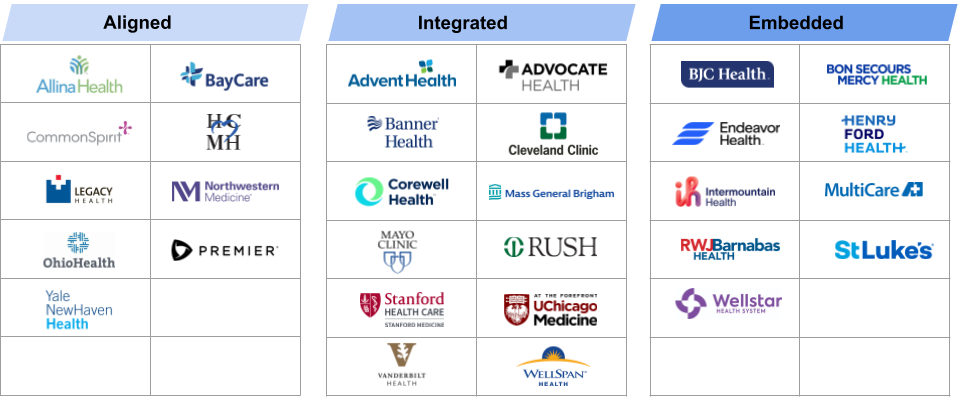
Embedded
Standards meaningfully influence critical sourcing decisions where continuity of care matters most
-
Integrated
Standards are quantitatively incorporated into supplier evaluation criteria
-
Aligned
Standards are requested and considered qualitatively during sourcing events
-
N/A
HIRC resiliency badges are not currently part of the sourcing process

This initiative uses four application levels to show how resiliency standards influence sourcing decisions
Who Should Participate?
Any health system or procurement leader looking to strengthen supplier resiliency and enhance risk-informed sourcing practices.
Purchasers Who Have Adopted HIRC Standards in Sourcing
How to Get Started (Simple 3 Steps)
Assess Sourcing
Review where and how your current procurement processes include resiliency criteria today.
Do you request resiliency documentation?
Do you score it?
Apply Standards
Update supplier evaluation templates
Incorporate into RFP/RFQ language
Embed into scorecards and award criteria
Track Impact
Number of events with resiliency scoring
Supplier responses to resiliency requirements
Procurement outcomes tied to resiliency indicators
Frequently Asked Questions
-
What is the Resiliency in Procurement Initiative?
-
It’s a member-centered effort to incorporate resiliency criteria into sourcing decisions, so evaluations consider not just cost and quality, but a supplier’s ability to support continuity of care under stress.
-
Who should participate?
-
Any health system or procurement leader looking to strengthen supplier resiliency and enhance risk-informed sourcing practices.
-
How are resiliency criteria applied in procurement?
-
HIRC defines four application levels:
-
Embedded: Standards influence key sourcing decisions
-
Integrated: Standards are scored quantitatively
-
Aligned: Standards are considered qualitatively
-
N/A: No resiliency criteria currently used
These levels help you benchmark and improve how your organization uses resiliency in supplier evaluations.
-
-
Why should we integrate resiliency standards into sourcing?
-
Incorporating resiliency criteria helps reduce supply disruptions, elevate supplier preparedness, strengthen continuity of care, and improve your procurement risk profile.
-
How do I get started?
-
-
Assess your current sourcing integration — review how resiliency is used today
-
Apply HIRC’s resiliency standards — update scorecards, templates, and RFP language
-
Track the impact — measure resiliency-influenced sourcing outcomes
-
-
Do we need to be an HIRC member to participate?
-
Participation is designed for HIRC members. If you’re not yet a member, contact HIRC for membership details and benefits.
-
Are there tools or templates available?
-
Yes — HIRC provides downloadable standards, scorecard templates, RFP language examples, and best practice playbooks to support implementation.
-
Does “Embedded” require a fixed numeric weighting
-
No. The reference to “~5% weighting” was provided as an illustrative example of what meaningful influence on sourcing decisions might look like — it is not a mandatory threshold or fixed requirement.
Embedded status is earned when a resiliency standard meaningfully influences sourcing decisions in areas where continuity of care is critical. The actual importance or score assigned to that standard may vary by health system, sourcing category, or procurement approach. Variability in how resiliency criteria are weighted across evaluations is expected and still consistent with achieving Embedded recognition.
Our goal is to ensure standards are genuinely integrated into decision-making in ways that improve patient care and supply continuity — not to enforce arbitrary numeric cutoffs.
-
What’s the difference between ‘Integrated’ and ‘Aligned’?
-
-
Integrated: Resiliency criteria receive a quantitative score in supplier evaluations
-
Aligned: Resiliency criteria are requested and considered, but not scored numerically
-
-
Can this initiative support Gartner Top 25 resiliency scoring?
-
Yes. Applying resiliency standards in procurement strengthens your overall organizational resiliency posture, which aligns with external evaluations like the Gartner Top 25 resiliency component.
-
Who can I contact for help?
-
For questions about applying standards, tools, or participation, email: partners@hirc.org